Microtome Care and Maintenance Tips for Longer Equipment Life
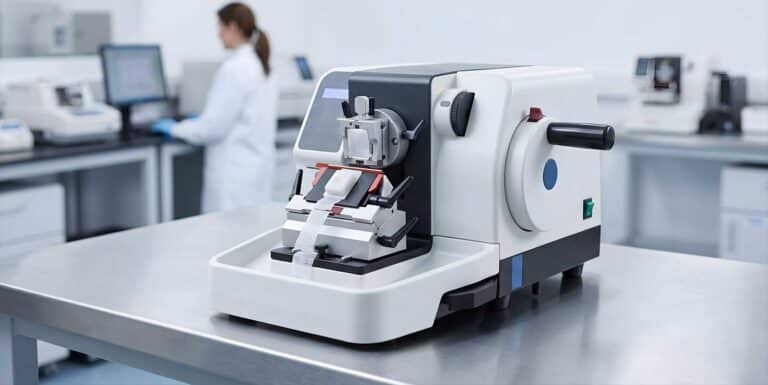
Microtomes are among the most frequently used precision instruments in histology laboratories. Day after day, they are expected to produce thin, consistent tissue sections while maintaining accuracy at the micron level. That level of precision makes proper microtome care and maintenance essential.
Paraffin buildup, worn components, improper lubrication, loose hardware, and neglected cleaning can gradually affect section quality and equipment performance. Small problems may first appear as chatter, compression, uneven sections, or increased resistance during operation. If they are ignored, those same problems can eventually contribute to more expensive repairs and unnecessary downtime.
A consistent microtome maintenance routine helps laboratories protect their equipment, improve sectioning performance, and identify potential problems before they become major failures. Here are practical microtome care and maintenance tips that can help extend equipment lifespan.
Why Is Microtome Maintenance Important?
A microtome is a precision mechanical instrument. Its components must work together smoothly to advance a specimen by extremely small, controlled increments.
Over time, routine use introduces paraffin, tissue debris, dust, and general mechanical wear. Even small amounts of buildup can interfere with moving components or prevent the specimen and blade assemblies from operating as intended.
Regular maintenance can help:
Maintenance also makes troubleshooting easier. When a clean, properly maintained microtome suddenly produces poor sections, technicians can investigate the blade, tissue processing, embedding, or other potential causes with more confidence.
1. Clean Paraffin and Tissue Debris Daily
Daily cleaning is one of the simplest ways to extend microtome life.
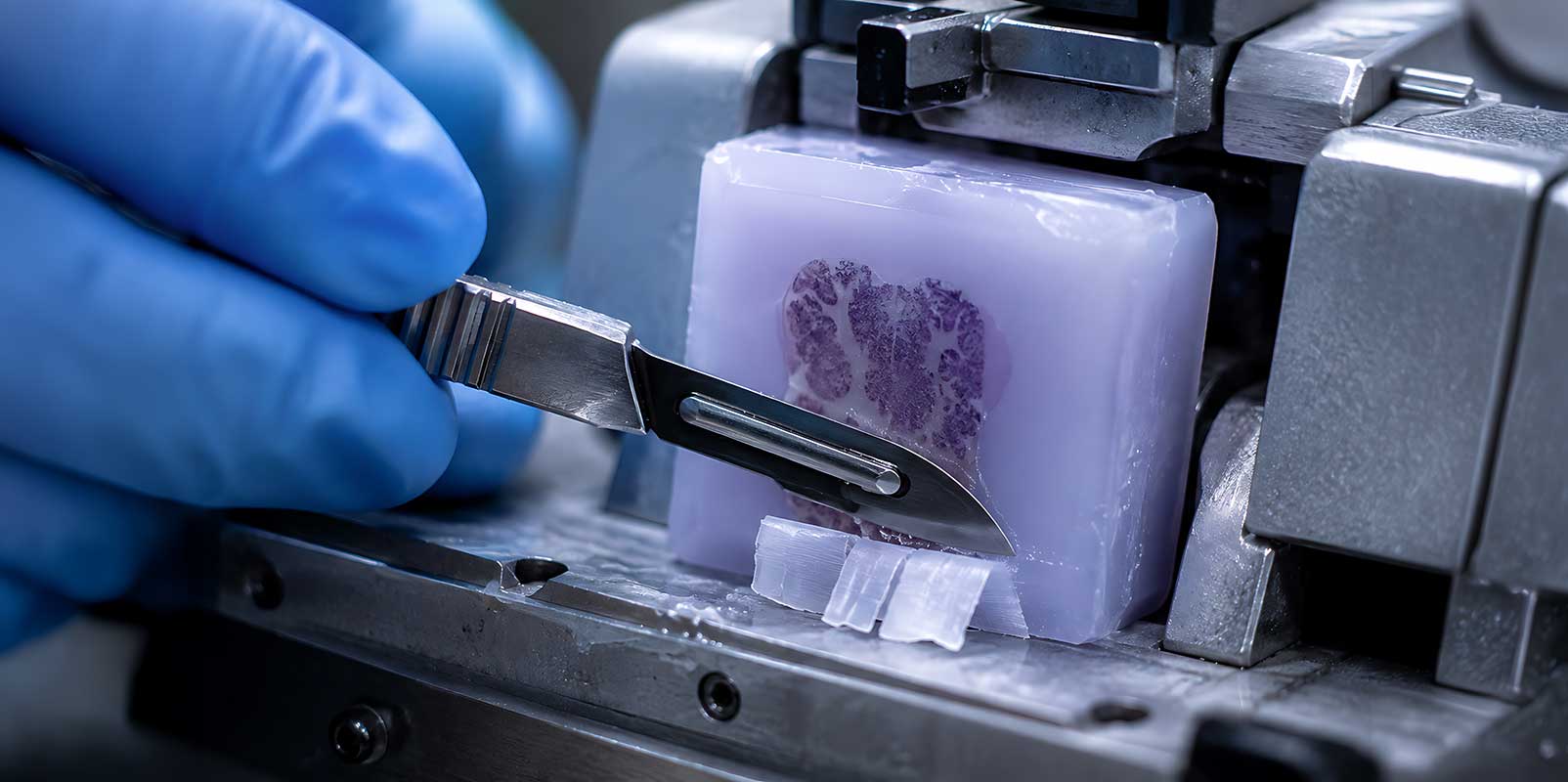
Paraffin shavings accumulate quickly around the blade holder, specimen clamp, handwheel area, and other surfaces. Tissue fragments and dust may also collect in areas that are difficult to see.
Allowing this material to remain can interfere with moving parts and make it harder to inspect the instrument for developing problems.
At the end of routine use:
Avoid forcing debris deeper into mechanical assemblies. Also, do not flood the instrument with cleaning solutions unless the manufacturer specifically recommends doing so.
A few minutes of cleaning each day can prevent months or years of accumulated contamination.
2. Inspect the Blade Holder Regularly
The blade holder directly affects section quality and operator safety.
Paraffin buildup beneath or around the holder can affect positioning. Loose components can also contribute to vibration and inconsistent sections.
Before sectioning, inspect the holder and confirm that it is clean and secure. Look for:
Always engage the handwheel lock and follow appropriate blade safety procedures before cleaning or adjusting the blade holder.
A blade holder that shifts during cutting can create sectioning problems even when the rest of the microtome is functioning correctly.
3. Don’t Assume Every Sectioning Problem Is the Blade
Changing the blade is often the first response to poor section quality, and sometimes that solves the problem.
However, repeatedly replacing blades without correcting the underlying issue can waste supplies and delay troubleshooting.
Common sectioning problems include:
A damaged or dull blade can certainly cause these problems. However, similar symptoms may result from loose clamps, incorrect clearance angles, worn components, or poorly processed tissue.
Our guide to Common Microtome Problems and How to Fix Them explores how to distinguish equipment-related issues from processing and specimen problems.
4. Check the Specimen Clamp and Orientation System
The specimen must remain stable throughout each cutting stroke.
Even slight movement can create variations in section thickness or produce chatter. Regularly inspect the specimen clamp and orientation mechanism for looseness, buildup, or wear.
If a block appears to move during cutting, stop and inspect the system rather than compensating with additional pressure or cutting force.
Excessive force may temporarily produce a section, but it can also increase wear on the microtome.
5. Pay Attention to Clearance Angle
Clearance angle affects how the blade interacts with the tissue block.
If the angle is incorrect, technicians may encounter compression, chatter, poor ribbon formation, or inconsistent section quality.
The appropriate setting varies by microtome and blade system. Therefore, always start with the manufacturer’s specifications.
If section quality changes after the blade holder has been removed, cleaned, or adjusted, verify the clearance angle before assuming there is a mechanical failure.
6. Lubricate Only Where and When Recommended
Lubrication is important for many mechanical systems, but more lubricant is not necessarily better.
Applying the wrong product—or lubricating components that were not designed to be lubricated by the operator—can attract dust and debris or interfere with precision mechanisms.
For proper microtome maintenance:
If a handwheel or feed mechanism begins feeling unusually stiff, don’t automatically add lubricant. Increased resistance can indicate contamination, wear, alignment issues, or another mechanical problem that should be inspected.
7. Watch for Changes in How the Microtome Feels
Experienced technicians become familiar with the normal feel and sound of their equipment.
Changes can provide valuable early warning signs.
Pay attention to:
A microtome does not have to stop operating completely to require attention.
Addressing an unusual sound or movement early may prevent a relatively minor issue from developing into a larger repair.
8. Remember That Processing Quality Affects Sectioning
Sometimes a microtome receives the blame for a problem that actually began hours earlier in the tissue processor.
Poor dehydration, clearing, or paraffin infiltration can produce blocks that are difficult to section. Excessive processing conditions may also create hard or brittle tissue that contributes to chatter.
For example, improperly balanced heat, vacuum, and agitation can affect tissue infiltration and ultimately change how a specimen behaves at the microtome.
Our article on The Role of Agitation, Heat, and Vacuum in Tissue Processing Quality explains these upstream factors in greater detail.
When troubleshooting section quality, consider the entire histology workflow instead of evaluating the microtome in isolation.
9. Keep a Maintenance and Service Record
Maintenance records are useful for more than compliance.
Tracking service history can reveal patterns that are easy to miss. Record important information such as:
If the same component needs repeated attention, the service history can help you decide whether another repair makes financial sense.
Records also become valuable when managing several microtomes across a laboratory. They make it easier to compare equipment performance and plan future capital purchases.
10. Schedule Professional Preventive Maintenance
Daily cleaning and operator inspections are important, but they do not replace professional preventive maintenance.
A trained service technician can inspect internal components that laboratory personnel typically should not access. Depending on the model and manufacturer recommendations, professional service may include checking:
Professional maintenance also creates an opportunity to replace aging parts before they fail during normal laboratory operations.
When Does a Microtome Need More Than Maintenance?
Even excellent maintenance cannot keep equipment operating indefinitely.
As a microtome ages, laboratories may encounter increasingly frequent repairs, obsolete parts, or mechanical wear that cannot be economically corrected through routine maintenance.
Warning signs may include:
At that point, the question changes from “How do we maintain this microtome?” to “Does continuing to repair it still make financial sense?“
Our guide to Managing the Lifecycle of Histology Instruments explains how laboratories can decide when to maintain, refurbish, or replace equipment.
If replacement is the best option, laboratories can also explore available histology equipment or determine whether existing equipment qualifies for an equipment trade-in.
A Simple Microtome Maintenance Checklist
A maintenance program does not need to be complicated. The key is consistency.
Daily
Periodically
Professional Service
Specific maintenance intervals should always follow the recommendations for the individual microtome model and the laboratory’s workload.
Preventive Care Supports the Entire Histology Workflow
Good microtome care and maintenance does more than protect one piece of equipment. Reliable sectioning reduces repeated work, wasted blades, lost tissue, and workflow interruptions.
It can also help technicians identify when a problem originates somewhere else.
A clean, calibrated, mechanically sound microtome establishes a reliable baseline. If sectioning quality suddenly changes, staff can then investigate specimen preparation, tissue processing, paraffin quality, blade selection, and other variables with greater confidence.
This is why preventive maintenance should be viewed as part of an overall equipment lifecycle strategy rather than an isolated service task.
Final Thoughts
Microtomes perform precise mechanical work every day, and small maintenance habits can have a significant effect on their long-term performance.
Regular cleaning, proper blade holder care, correct lubrication, routine inspections, and professional preventive maintenance can help reduce common microtome problems while extending equipment lifespan.
Just as importantly, laboratories should pay attention to changes in performance. Increased resistance, vibration, unusual noises, or recurring sectioning artifacts should not be considered normal simply because the microtome still operates.
Eventually, every instrument reaches a point where refurbishment or replacement becomes more practical than continued repair. Until then, consistent microtome maintenance is one of the most effective ways to protect the laboratory’s investment and maintain reliable sectioning performance.
For laboratories evaluating additional equipment options, browse histology equipment, explore available new equipment, or visit Mercedes Scientific for additional histology resources and laboratory supplies.