Lifecycle Management of Histology Instruments: When to Maintain, Refurbish, or Replace
Histology labs rely on precision equipment to deliver accurate, consistent results every day. From tissue processors and embedding centers to microtomes, stainers, and coverslippers, each tool is important. They help prepare specimens correctly and efficiently.
As equipment gets older, labs face a common problem: How do you know when to maintain, fix, or replace a tool? Poor timing can lead to costly downtime, inconsistent results, and unnecessary spending. The right strategy supports performance, controls budgets, and reduces workflow disruption.
This guide offers a practical way to manage the lifecycle of histology equipment. It covers signs of wear, suggested maintenance, and how to decide on refurbishment or replacement.
Why Histology Equipment Lifecycle Management Matters
Histology equipment lifecycle management means planning and controlling how equipment works from purchase to the end of its use. It includes:
- Preventive maintenance scheduling
- Repair and parts replacement planning
- Cost monitoring and ROI assessment
- Decisions about refurbishment or replacement
- Long-term budgeting and capital planning
Effective lifecycle management helps labs:
- Reduce equipment-related workflow disruptions
- Improve consistency and diagnostic confidence
- Extend the usable life of expensive instruments
- Plan capital expenses strategically
- Improve staff productivity and morale
If your lab is making a long-term plan and needs help with costs, consider refurbished options. Partners like Histology Equipment can assist labs in assessing their equipment needs and lifecycle choices.
The Three Lifecycle Decisions: Maintain, Refurbish, or Replace
Most equipment decisions fall into three categories:
1. Maintain
Maintain equipment when performance is stable and repairs are predictable. Preventive maintenance is typically the most cost-effective option.
2. Refurbish
Refurbish when equipment is fundamentally sound but needs deeper restoration to regain performance and reliability.
3. Replace
Replace when equipment is no longer reliable, parts are unavailable, performance is inconsistent, or repair costs exceed value.
Histology Equipment Maintenance Schedule: What to Maintain and When
A consistent histology equipment maintenance schedule is the foundation of lifecycle management. Maintenance keeps instruments accurate, safe, and efficient while preventing breakdowns.
Below are practical maintenance intervals for common histology equipment. Actual timing depends on volume, environment, and manufacturer requirements.
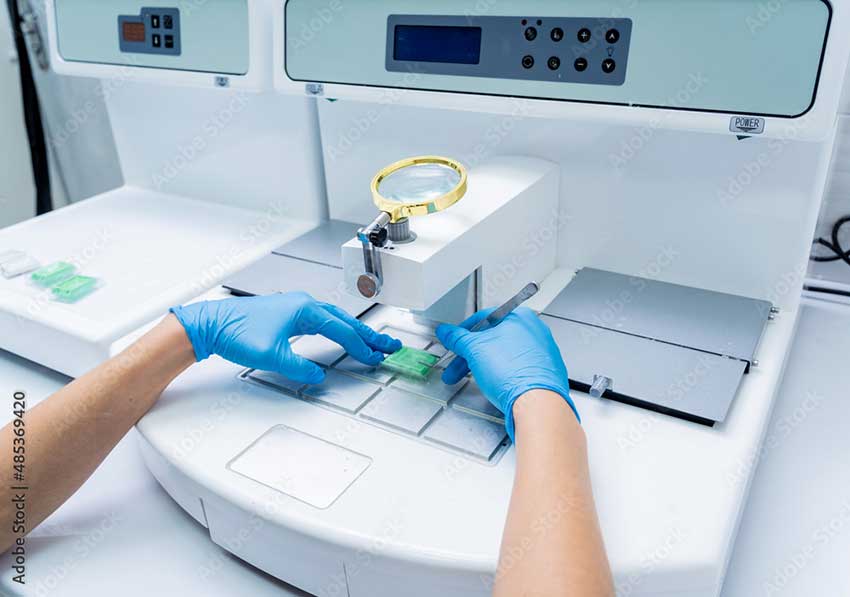
Tissue Processors:
Maintenance frequency: Daily, monthly, annually
Daily/Weekly
- Check reagent levels and reagent clarity
- Hot water flush
- Remove tubing and inspect the instrument for leaks and evidence of leaks
- Clean exterior and ensure vents are clear
Monthly
- Replace filters as recommended
- Run internal diagnostic tests if available
Annually
- Full preventive maintenance service
- Calibration checks
- Replace wear items proactively
Maintain when: Reagent cycling is consistent, temperature control is stable, and downtime is minimal.
If you are researching replacement options or planning an upgrade cycle, you can explore tissue processor models here: Tissue processor options.
Embedding Centers
Maintenance frequency: Weekly, quarterly, annually
Weekly
- Clean wax reservoirs and remove debris
- Inspect forceps warming station
- Check cold plate function
Quarterly
- Inspect heating elements and thermostats
- Clean internal wax pathways
Annually
- Preventive service and temperature verification
Maintain when: Temperature holds steady, wax flow is smooth, and cold plate chills evenly.
For labs planning to replace embedding systems and related equipment, this product category can be helpful: Embedding, cryotomy, and grossing equipment
Microtomes
Maintenance frequency: Daily, monthly, annually
Daily
- Clean blade holder and stage
- Remove paraffin debris
- Lubricate as manufacturer recommends
Monthly
- Check alignment and section thickness consistency
- Inspect clamps and movement mechanisms
Annually
- Full inspection and tuning by service tech
Maintain when: Sectioning remains smooth, thickness is consistent, and mechanical resistance is low.
If your lab is comparing microtome options during lifecycle planning, you can browse models here: Microtome options.
Stainers
Maintenance frequency: Daily, weekly, monthly, annually
Daily
- Check reagent quality
- Clean external surfaces and racks
Weekly
- Clean staining stations and drainage
- Replace reagents as needed
Monthly
- Run system checks
Annually
- Preventive maintenance and performance testing
Coverslippers
Maintenance frequency: Daily, monthly, annually
Daily
- Clean mounting media applicators
- Inspect coverslip feed mechanisms
- Wipe surfaces and remove residue
Monthly
- Inspect moving parts and sensors
- Check for consistent coverslip placement
Annually
- Full service and calibration
Maintain when: Coverslips apply evenly with low error rate and no air bubble increase.
When to Refurbish Histology Instruments
Refurbishment is a strategic middle ground between ongoing repairs and full replacement. Especially valuable when equipment is still structurally solid but shows age-related wear.
Common Reasons Labs Refurbish
- Performance decline but unit is still repairable
- Recurring issues that maintenance cannot fully solve
- Desire to extend life without major capital expense
- Need to standardize performance across multiple units
- Budget cycles require delaying replacement
Refurbishment Often Includes:
- Replacement of wear components
- Deep cleaning and mechanical restoration
- Recalibration and operational testing
- Cosmetic restoration (optional but common)
- Evaluation for reliability and throughput readiness
Refurbishment is often a strong option for:
- Tissue processors
- Automated stainers
- Coverslippers
- Embedding centers
- Microtomes (depending on mechanical condition)
If your lab is thinking about upgrades or looking at refurbished options, Histology Equipment can help. They provide useful information on performance, cost, and long-term return on investment (ROI).
When to Replace: Histology Instrument Replacement Guide
A clear guide for replacing histology instruments helps labs avoid spending too much on old equipment.
Replace When Repairs Become Too Frequent
A good rule of thumb is this: if you are calling for service often and downtime is disrupting workflow, replacing the equipment may cost less than continuing repairs.
Replace When Parts Are No Longer Available
If a unit is discontinued and parts are difficult to source, the risk of extended downtime increases significantly.
Replace When Performance Affects Quality
If equipment inconsistency leads to:
- staining variability
- sectioning defects
- tissue processing issues
- slide quality problems
Replacement becomes a quality assurance decision, not just a financial one.
Replace When Total Cost of Ownership Becomes Too High
Consider:
- service calls
- replacement parts
- downtime and rework costs
- staff overtime
- lost productivity
If these exceed the cost of replacement over time, replacement is the better ROI.
A Simple Decision Framework (Maintain vs Refurbish vs Replace)
Use this quick evaluation model:
Maintain if:
Refurbish if:
Replace if:
How Lifecycle Management Improves Budgeting and ROI
Strong histology equipment lifecycle management makes lab spending predictable instead of reactive. It helps labs:
- Plan capital expenses years ahead
- Prioritize which instruments to upgrade first
- Avoid surprise downtime and rushed purchases
- Extend instrument life while maintaining quality
A proactive lifecycle approach also supports staffing efficiency. When equipment works consistently, staff spend less time troubleshooting and more time processing cases.
Final Thoughts
Histology instruments are long-term investments, but they require active management to stay reliable and cost-effective. With a clear maintenance schedule for histology equipment, labs can stay organized and reduce downtime.
When performance begins to slip, refurbishment can restore function and extend service life without major capital spending. When reliability and quality are at risk, replacement becomes the smartest decision.
By creating a clear plan for managing histology equipment, labs can save money and improve their workflow. This helps ensure steady performance and builds patient trust for years ahead.

If your lab needs help with planning, refurbishment, or cost-effective equipment, Histology Equipment can assist. We help you make equipment choices that match your long-term goals.